
Let’s Divide Dressage Classes By Experience Instead Of Occupation
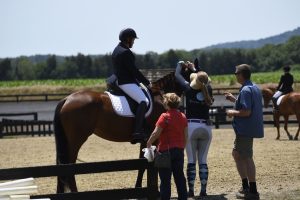 One of my favorite things about dressage is that there are so many ways to play. Schooling shows, recognized shows, little local ones, big hairy international ones, everything in between. There’s room in our sport for the person with the day job who are weekend warriors with their rescue pony, and there’s room in our sport for the independently wealthy with time and resources to ride at the top level. There’s room for the professional who teaches people how to do their first tests, and there’s room for the professional who brings them to the international ring. There’s lots of room.
But I’ve always felt that dividing classes by rider occupation was a silly line in the sand to draw. The working students of the world who come to their jobs not knowing much more than how to put their horses on the bit have to compete in their first-ever first level test against me on something with international ambitions, and that seems unfair. The weekend warrior on the pony has to compete against the amateur who’s made Grand Prix horses and is starting anew with something young, and that seems unfair.
And yeah, it’s just a ribbon. At the local shows, I don’t care, but some people do. And at the regional and national championships, a lot of people do. For some riders, that local show is their regionals, or their nationals or their Olympics.
What if, instead of dividing classes by rider occupation, we divided them by level of rider experience?
Read the rest at The Chronicle of the Horse!
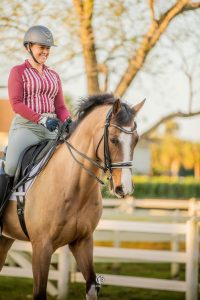
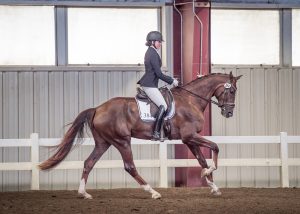 I bought Ojalá (Vitalis—Fienna, Sir Sinclair) from her breeder, Belinda Nairn, as a foal. She grew up in a field, learned to stand on crossties, lead, have a bath, be civilized. At 3, she was backed. She learned to walk, trot and canter on the bit like a lady, work with other horses in the ring, and hack out by the time I picked her, now 4, up in April of this year. I rode her and found her delightful, and then handed the keys to my wonderful assistant trainer, Ali Redston, who has a much greater affinity for the youngsters than I do. They went on an off-property outing, which was uninteresting. They went to a recognized show, where they performed admirably in two Materiale classes, and behaved to perfection.
 I’m writing this blog from my couch, where it is a delightful 72 degrees. I have an iced coffee, some office work and a leisurely Monday afternoon ahead of me. I am just home from teaching a clinic in Texas, where the high each day was 102. It’s been marginally cooler here in Virginia, but not by much during our recent heatwave.
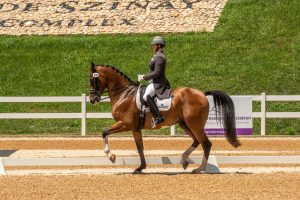 Big blue ribbons, plus OPEN RIDE SPOTS in our upcoming clinics with bit fitter Stephanie Brown Beamer, renowned horsemanship expert Chelsea Canedy, and more!
 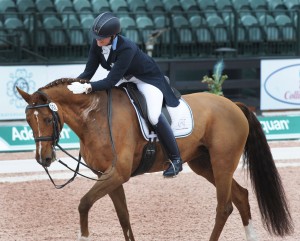 She was 5 but green broke, still owned by her breeder. I was 21, a veteran of the Young Rider and U25 programs, and as such I thought I knew a few things about horse training. I was wrong, as young people filled with hubris are often are. But I couldn’t have asked for a better teacher than Ellegria.
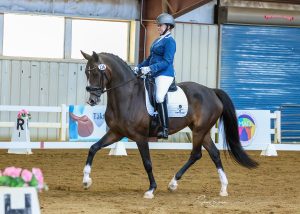 Dogs, horses, humans—we’re all malleable, but never more than as youngsters. Our early years are so terribly critical. It’s why the folks who take Thoroughbreds off the track, or who fetch neglect cases from the auction, and make them into good citizens in sport disciplines are really so extraordinary. It’s much easier to teach something well the first time than it is to install it as an after-market add-on.
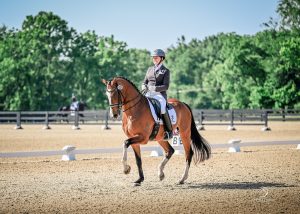 We’ve got rider biomechanics clinics, we’ve got horsemanship clinics, we’ve got traditional dressage clinics, and we’ve got a heckofa lotta ribbons.
  It’s May 1, and we’re off and running! Read our latest e-newsletter to learn all about some great upcoming events, a special lease opportunity, and all the news that’s fit to print.