
The Life of a Professional Isn’t as Glamorous as Social Media Makes it Look
Lauren wrote a deeply personal piece for NoelleFloyd.com, a leading equestrian lifestyle magazine, about the ups and downs of being a professional rider, and how social media can both make it seem much sunnier, and communicate truth. For more information on the Red White & Blue (Ribbon) Club, click here.
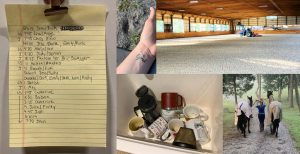 I was hiking with a friend and student of mine, an amateur rider who brought her last horse up to the FEI-level in dressage. Her next project is a young, athletic Warmblood mare who was, at the time, hissing and spitting about the application of leg, as the young and athletic Warmblood mares of the world have been known to do.
“I’d be a little panicked,” she said as we scrambled over hill and dale, “if I hadn’t known you for a decade and watched you suffer through Midge and Ella and Fender and Danny and Dorian’s five-, six-, and seven-year-old years when they were teenage dirtbags. And they all worked out. So I have faith.”
It’s a sentiment I hear often. I’ve been writing a blog for the “Chronicle of the Horse” for 10 years, a decade that has seen many a young horse come into my life, behave like a doofus for a while, then finally accept the rules of life and grow up to be a perfectly delightful international horse either for myself, an amateur, or a kid. I’ve also brought their stories out into the world through my personal blog, and at least once a week I get an email from someone who tells me that the stories of my idiot young horses growing up gives them hope for their rogue youngster. I love writing, and I’ve used the medium to share both the ups and downs of life as a dressage trainer, of which there are many.
In these internet-fueled times, where much of our time and energy is spent on social media, it’s easy to get caught in Wonderland, taking everyone’s Facebook and Instagram lives as reality. I can’t imagine how it must feel to be the average amateur rider, dealing with the frustrations and plateaus of training with their one horse on whom they focus their attention (and, accordingly, base their happiness), only to see on Facebook a pretty picture of me frolicking on Elvis in the field. That moment I posted for the world to see is a sunny view of my life, but I promise you, things are not always as rosy as they appear. What they don’t see is Puck had a fat leg that day, Swagger is two inches taller behind at the moment, and I’m dealing with having gained 10 pounds since I hurt my back this winter. On the flipside, I’m thrilled to death because I have two new working students, which brings an end to me running my barn at 50% staff. And that’s just this month.
Read the rest at Noelle Floyd.
 We had a wild and winning June, with lots of achievements, clinics, new faces and more! Read the highlights, and learn about our next round of exciting clinics and fun events, in our June e-newsletter.
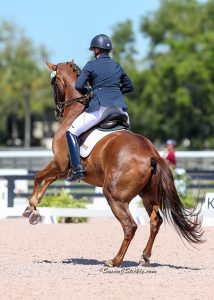 FACT: You are, at some point in your life as a competitive rider, whether an Olympic contender, a walk-trot division regular at schooling shows, or anyone in between, going to have a competition that does not go according to plan. It’s just the nature of things, and if you can’t accept that, then please find a new hobby RIGHT NOW. If you can embrace the possibility of having a train wreck ride, then here is my guide on how to deal with it when it inevitably happens.

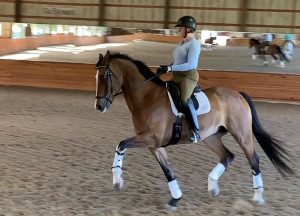
 Serious riders, particularly those of us riding either older horses or horses we hope to get to a Big Level and then enjoy at that level for many years, spend a lot of time thinking about the fine balance between working our horses hard enough to achieve fitness and strength to minimize the risk of injury and not working them so hard that they get hurt along the way. And all of us, at every level, should spend some time thinking about keeping our horses’ minds fresh so they enjoy the work and can approach it with focus and energy without fizzling out.
 We’ve got show results, we’ve got clinics, we’ve got some great new faces around the farm, and we’ve got a new USDF Bronze Medalist! Read all about it in
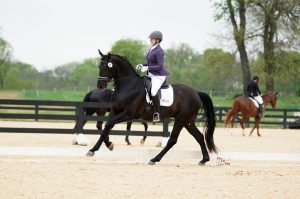 My experience with young horses has been almost exclusively with two kinds. The first are ones with very good characters who weren’t international quality. As they’ve been owned and ridden by amateurs, that’s been by design. They were bought so that their owners could ride them as they developed up the levels, so the trade-off—less power, better rideability—was absolutely what they needed.